New Release
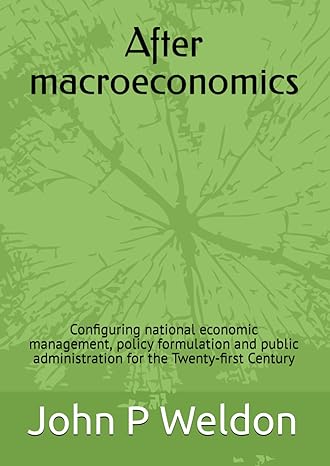
After macroeconomics
Dr John Phillips Weldon Ph.D
Configuring national economic management, policy formulation and public administration for the Twenty-first Century
About the Book
Redefining Economic Thought for the 21st Century
Case Studies Analyzed
Years of Research
Clients Satisfaction

Whats included
Featured Case Studies
Explore key economic events and challenges through in-depth case studies. From the Global Financial Crisis to the economic implications of Brexit, and more, these analyses offer valuable insights into the complexities of modern economies.
The Global Financial Crisis
Brexit and its Economic Implications
Inefficiencies in the US Healthcare System and NHS
Criminal Use of Banking Facilities
After macroeconomics
Innovative Approach
Dr. Weldon’s book introduces causal simulation techniques, particularly system dynamics, as a superior alternative to traditional macroeconomic models. These techniques offer:
-
Accurate prediction of future effects of policy decisions
-
'What if' experimentation for optimal decision-making
-
Enhanced effectiveness and efficiency in public and private sectors
-
Reduced operational risk in complex systems
Why This Book Matters
-
Offers a comprehensive critique of current macroeconomic practices
-
Proposes innovative solutions for effective economic management
-
Addresses critical issues in public policy and administration
-
Provides insights into major economic events and ongoing challenges
-
Presents a path towards more harmonious achievement of public policy goals
Testimonial
What They Say
Hear what readers are saying about “After Macroeconomics” and how it’s making an impact.
After Macroeconomics: Configuring National Economic Management, Policy Formulation, and Public Administration for the Twenty-first Century” by John P. Weldon, Ph.D., is a groundbreaking work that challenges the traditional paradigms of macroeconomic theory and practice. This book is a must-read for anyone interested in the future of economic policy and management.
Weldon’s book is a comprehensive critique of traditional macroeconomic approaches, which he argues are fundamentally flawed and incapable of delivering adequate economic performance. He proposes a new framework for economic management, policy formulation, and public administration that aims to be more effective, efficient, and harmonious.
— Robert Atunda
John P. Weldon’s “After Macroeconomics” is a revolutionary critique of traditional economic theories, presenting a fresh framework for economic management and policy formulation. Weldon’s meticulous dissection of conventional macroeconomics, coupled with his innovative approach, makes this book a significant contribution to the field.
The comprehensive analysis of institutional crises and the inclusion of practical simulation applications provide valuable insights and real-world applicability. While its detailed technical content might challenge some readers, the book’s bold critique and forward-thinking solutions offer a necessary and timely perspective on economic policy.
— Obido Samuel Chiemerie
About the Author
Dr John Phillips Weldon, Ph.D
Fellow of the Institute of Chartered Accountants in England and Wales (FCA). The concept for a new economic management approach arose during accountancy work, particularly with the UK company tax system.
Master’s degree (M.Ec) in managerial economics, which significantly influences the new approach.
Ph.D. in system dynamics (causal simulation modeling), the primary technical tool for this new approach.
Experience in the Australian federal public service, with professional modeling work that included system dynamics and discrete event modeling. Insights into public-sector adoption of advanced management techniques were gained.
Extensive private work applying system dynamics, including projects for a hospital, airline, hotel, air force, and rail network.

Ready to revolutionize your understanding of economics and public policy?
For inquiries about the book or to connect with Dr Weldon
Contact Me
Email Address
weldonj80@yahoo.com
Call Me
61 (0)475 229 820